Nemetschek, SGBA Sign MoU on Digital Twins and Green Buildings
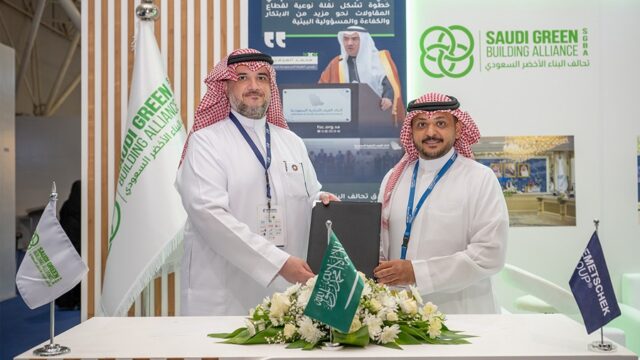
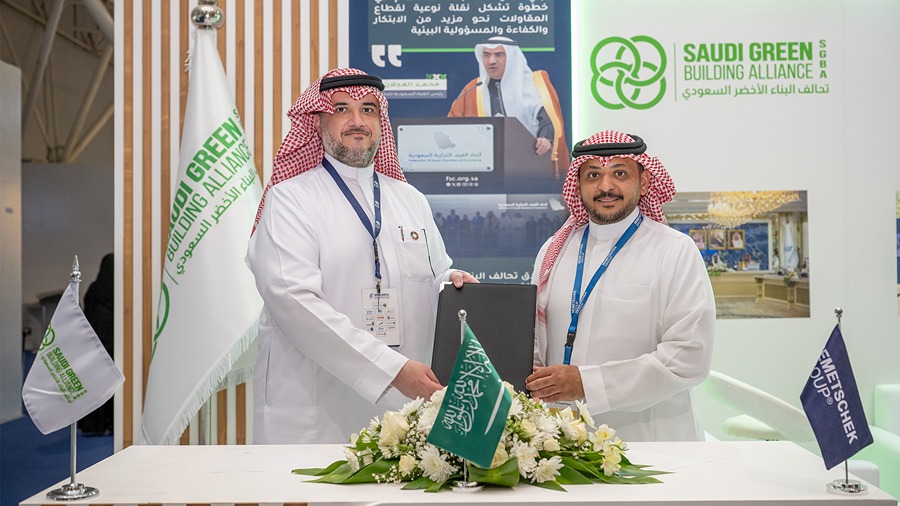
Image: Nemetschek Group

RIYADH, Saudi Arabia, Oct 2, 2026 – Nemetschek Group and the Saudi Green Building Alliance (SGBA) have signed a memorandum of understanding (MoU) to develop training and pilot projects focused on digital twins, building lifecycle management and asset performance in Saudi Arabia. The work will examine technology applications for building operations, including operational efficiency, net-zero objectives and decision-making throughout a building’s lifecycle.

Nemetschek is the first technology company to sign an agreement with SGBA. Joint activities will include market development, industry events, conferences, awareness campaigns and engagement with stakeholders. The organizations will focus on digital and sustainable approaches to planning, designing, constructing and operating buildings and infrastructure.

“Saudi Arabia is redefining what is possible in the built environment by setting new benchmarks for sustainable development at an unprecedented scale,” said Eng. Muayad Simbawa, managing director, Middle East, Nemetschek Group. “To achieve these ambitions, sustainability and digitalization must advance together. Through our collaboration with SGBA, we aim to help foster greater industry engagement, encourage the adoption of innovative technologies, and support initiatives that enable stakeholders to make smarter, data-driven decisions throughout the entire building lifecycle. We are particularly proud to be the first technology company to formalize this collaboration with SGBA and contribute to the next chapter of the Kingdom’s transformation journey.”

Dr. Mohammed Al-Surf, founder and chairman of the board of the Saudi Green Building Alliance, said: “The transition towards a more sustainable built environment requires strong partnerships that connect innovation, expertise, and practical implementation. Our collaboration with Nemetschek Group reflects SGBA’s commitment to bringing together organizations that can help accelerate meaningful progress across the sector. By combining global technology leadership with local industry engagement, we aim to support the development of knowledge, skills, innovation, and collaborative initiatives that contribute to Saudi Arabia’s sustainability goals and reinforce the Kingdom’s position as a leader in the global green building movement.”

The organizations plan workshops, training programs, seminars and knowledge-sharing sessions on building lifecycle management, asset performance optimization and digital twin technologies. Nemetschek and SGBA will also exchange technical expertise, industry practices and insights.

The organizations plan to engage government entities, developers, consultants, contractors, academic institutions and sustainability professionals. The MoU aligns with Saudi Vision 2030 and the Saudi Green Initiative, which focuses on climate change, quality of life and environmental protection.

Source: Nemetschek Group

About the Nemetschek Group

Nemetschek Group, founded in 1963 and based in Munich, Germany, is a global provider of software solutions for the architecture, engineering, construction, and operations (AEC/O) industries, as well as the media and entertainment sector. The company operates through four business segments: Planning & Design, Build & Construct, Manage & Operate, and Media & Entertainment. Its portfolio includes brands such as Allplan, Graphisoft, Vectorworks, Bluebeam, and Maxon, offering solutions for building information modeling (BIM), structural design, project collaboration, and 3D visualization.  The company employs around 4,000 people and supports over 7 million users globally. Nemetschek Group continues to expand its presence in international markets, including in Saudi Arabia.

About the Saudi Green Building Alliance

The Saudi Green Building Alliance is a nonprofit, nongovernmental organization and Saudi Arabia’s representative to the World Green Building Council. It works with government agencies, regulators, developers, investors, designers, contractors and industry groups on sustainable, low-carbon and climate-resilient buildings. Its activities include promoting green building practices, supporting policy and regulatory alignment, and adapting international standards to Saudi Arabia’s environmental, climatic and economic conditions.

Impetus Expands Prism to Track AI Agent Costs and Risks

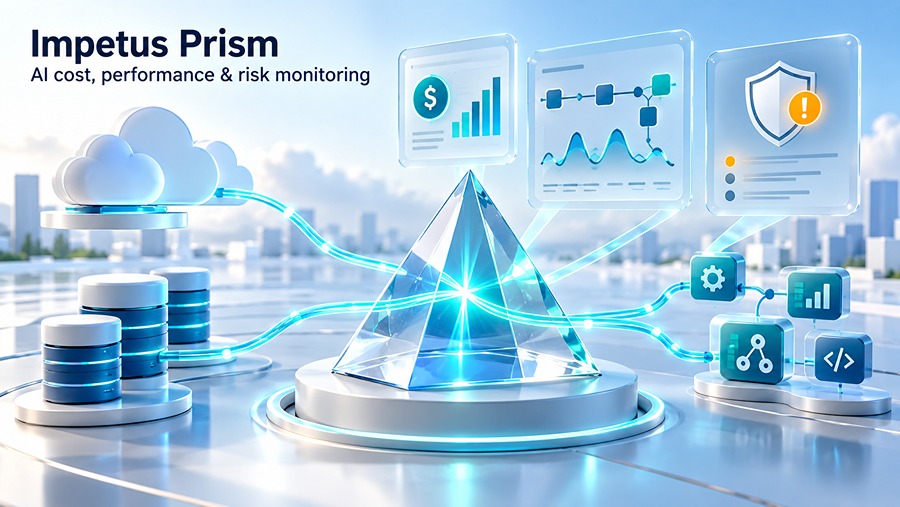
SAN JOSE, CA, Oct 2, 2026 – Impetus Technologies has expanded Impetus Prism to track AI agent costs, token use and workflow performance alongside cloud and data operations. The release also monitors potential data leaks, toxicity and prompt injection, combining operational and risk monitoring in one view.

Prism covers cloud services, Databricks, Snowflake and AI agents. Its monitoring tools help enterprises assess AI operations against governance and risk requirements.

Shilpi Saxena, VP – engineering, Impetus Technologies said: “As enterprises put agentic AI into production, it becomes imperative to understand how these systems are operating, what they are costing, and whether they can be trusted to perform within established boundaries. Our intent with Prism is to give enterprises the freedom to scale AI without compromising operational trust—providing the visibility, control, and accountability needed to operate AI confidently in production.”

The release includes:

  • Cost and token tracking: Monitors AI agent costs and token consumption, with recommendations for token optimization.
  • Workflow tracing: Tracks multistep agent workflows, sessions and traces, including latency and throughput.
  • Risk and compliance monitoring: Uses a large language model to evaluate potential information leakage, toxicity and prompt injection. Impetus describes this as an LLM-as-a-Judge approach.
  • Cost anomaly detection: Uses AI agents to identify unusual costs across cloud, Databricks and Snowflake environments.
  • AWS Glue optimization: Provides optimization and remediation capabilities for AWS Glue.
  • Data analysis and Snowflake sizing: Includes generative AI and generative business intelligence data analysis, and generative AI recommendations for Snowflake resource sizing.
  • Daily AI Digest: Provides a daily reporting feature.

Impetus lists agent response accuracy above 95% and operating cost optimization of up to 50%. Prism also supports AI auditing and traceability across workflows.

Prism forms part of the Impetus LEAP AI family of enterprise software offerings.

Source: Impetus Technologies

About Impetus Technologies

Impetus Technologies provides data engineering, software development and artificial intelligence services to large companies. The company began as a newspaper software business in Indore, India, in 1991. It incorporated in the United States in 1996 and is headquartered in Los Gatos, CA. Services include data modernization, cloud migration, analytics, data engineering and AI system development. Products include LeapLogic for data migration, Prism for AI observability, and Context Fabric for enterprise data. Teams use these products to update legacy data, build analytics pipelines and support AI applications. Impetus also designs AI agent workflows and governance controls for enterprise systems. Customers include companies in financial services, consumer goods, health care, life sciences and manufacturing. The company also serves travel, hospitality, aviation, retail and telecommunications organizations. Impetus reports more than 3,100 employees worldwide.

Airport Apron Planning Moves From Geometry to Operational Validation

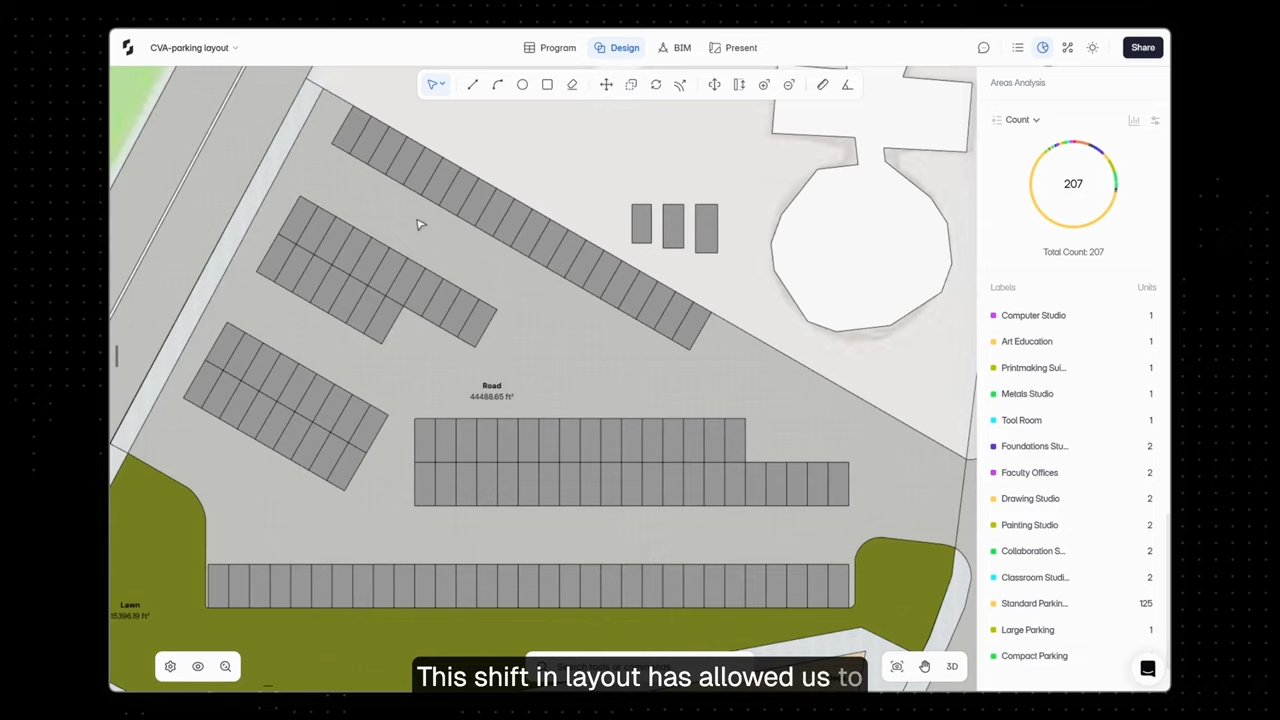
Snaptrude showing a geometry-based stand layout with count analysis for airport apron planning (source: Snaptrude).


Airport apron planning requires more than fitting aircraft silhouettes into available space. Snaptrude outlines a five-stage workflow that connects aircraft mix, parking geometry, circulation, and operational validation to help planners eliminate impractical layouts before investing in detailed simulation.

The process begins by defining the aircraft mix as multiple operating scenarios rather than designing around the largest aircraft alone. Planners should document aircraft dimensions, maneuvering methods, arrival and departure directions, service requirements, flexible-stand rules, and combinations that may occur simultaneously. Aircraft data should come from verified manufacturer or regulatory sources.

Next, planners convert aircraft dimensions into layered stand geometry. The aircraft body provides a physical reference, while separate envelopes represent parking clearances, movement paths, service areas, and obstacle buffers. Keeping these elements distinct helps teams understand why a proposed stand succeeds or fails.

Designers can then generate alternatives by varying stand orientation, centerlines, aircraft assignments, taxilane arrangements, and shared-use configurations. Geometry serves as an early filter for identifying clearance violations, blocked stands, path conflicts, and movements dependent on neighboring aircraft.

A geometrically valid arrangement, however, is not proof that the apron can operate safely. Surviving options must undergo further validation covering swept paths, pushback, towing, jet blast, service vehicles, passenger movement, emergency access, weather operations, and interactions between adjacent stands and taxilanes.

Flexible stands require particular attention because one position may accommodate a large aircraft or several smaller aircraft under different operating states. Exclusion rules and allowable configurations must therefore be explicit.

Snaptrude can support early option development through browser-based 3D modeling, parametric tools, BIM capabilities, collaboration, presentations, and common design exports. The company does not claim that the platform automatically performs airport-specific compliance or swept-path validation. Those responsibilities remain with qualified airport planners using applicable standards and simulation tools.

Endra Uses AI to Compress Electrical Design Into Hours

Source: AEC Magazine.


Endra has demonstrated Power Studio, its AI-based electrical design software for MEP engineers, showing how automation could significantly reduce the time required to complete detailed building electrical designs, says AEC Magazine.

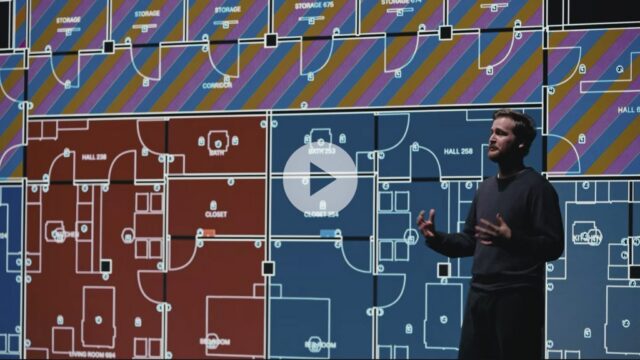
The first public demonstration took place during Endra’s Epoch event in Las Vegas, held the night before Autodesk University. During the presentation, Endra product specialists used Power Studio to process the electrical design of an eight-story, mixed-use building.

The demonstration covered an extensive workflow, including circuiting, cable sizing, panel schedules, and the production of Revit-ready drawings. Endra says work that would typically require about a week was completed in roughly three hours.

Power Studio is designed to automate repetitive engineering and documentation tasks while integrating with Revit. Rather than requiring engineers to manually perform each stage of electrical system design, the platform applies automation across multiple connected tasks and produces information that can continue into BIM workflows.

The demonstration follows Endra’s recent launch of Power Studio as an AI platform for electrical engineering. The company says engineers can import building models, establish project requirements, and use software agents to carry out design tasks. Engineers retain opportunities to review and approve the results as the design develops.

Power Studio also uses configurable Playbooks to capture a firm’s engineering standards, including approaches to equipment placement, circuiting, code interpretation, and calculations. The platform can check cable sizing and voltage drop against physical constraints and applicable building codes.

Its outputs can include Revit models, single-line diagrams, panelboard schedules, shop drawings, and bills of materials.

The demonstration highlights AI’s growing role in automating detailed MEP engineering rather than simply assisting with isolated tasks. Endra’s approach targets the repetitive work surrounding electrical system design while leaving engineers responsible for reviewing results and applying engineering judgment.

3D-Printed Cement Turns Buildings Into Energy Storage Systems

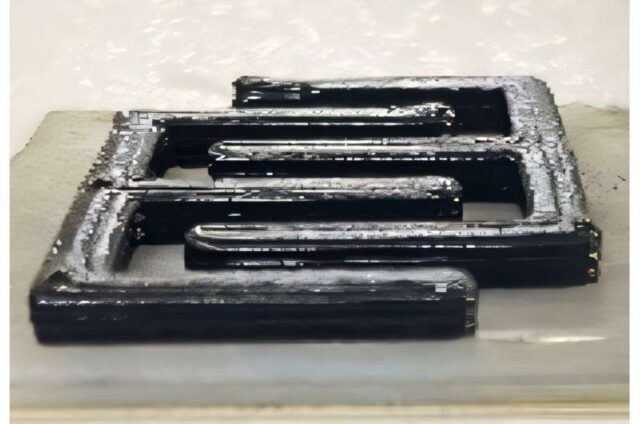
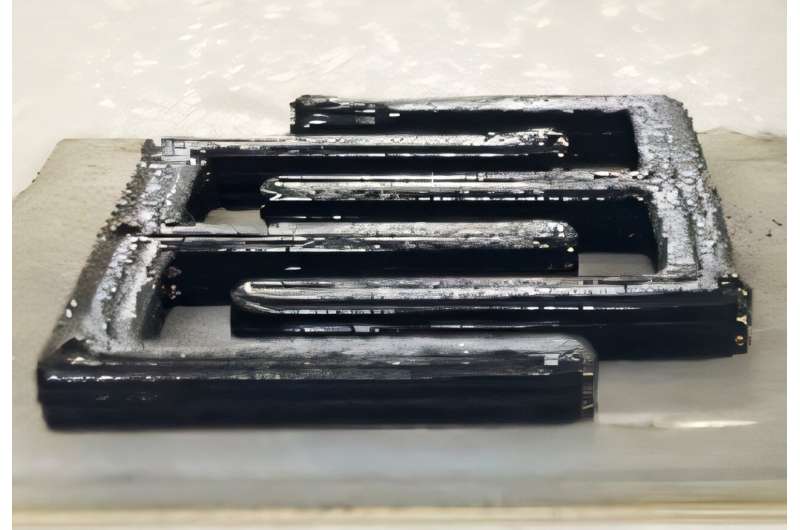
This cement-based supercapacitor is 3D printable and just as strong as commercial concrete used in slabs and stairs (source: ACS Nano, 2026. DOI: 10.1021/acsnano.6c09927).


Researchers have developed a cement-based supercapacitor that combines structural strength with energy storage, potentially allowing future buildings to store electricity directly within their concrete components. The technology could complement renewable energy systems by reducing reliance on separate batteries installed in utility rooms or on rooftops, tells Tech Xplore.

Supercapacitors store less energy than conventional batteries but can charge and discharge quickly and withstand large numbers of cycles. Researchers envision embedding them into buildings where renewable sources, such as solar panels, could recharge them frequently.

The team, including Jing Zhong, Wencai Ren, and Haiping Wu, created a printable electrode ink by combining cement, carbon nanotubes, and carbon black. Using a 3D printer, they deposited the mixture onto a small concrete slab in an interlocking finger pattern. As the cement hydrated, pores within the material filled with water and ions. The interdigitated electrode arrangement shortened the distance ions needed to travel, improving the device’s efficiency compared with earlier designs.

Importantly, adding energy-storage functionality did not eliminate the material’s structural usefulness. Compression tests showed that the cement-based supercapacitor achieved strength comparable to commercial concrete used for applications such as slabs and stairs.

To demonstrate its electrical capabilities, the researchers printed three supercapacitors on one concrete slab and connected them. Together, the devices successfully powered a small array of LEDs. Potential applications could eventually include emergency lighting and self-powered building sensors.

Temperature testing identified an important limitation. The supercapacitor remained stable under moderate heating and cooling, but its performance declined at approximately minus 18°C, or 0°F. The researchers plan to improve cold-weather performance in future work.

The study points toward multifunctional construction materials that do more than carry structural loads. By integrating energy storage into cement itself, buildings could potentially store locally generated renewable electricity while simultaneously supporting sensors and other smart-building systems.

Haptic Steering Wheel Lets Drivers Negotiate with Automation

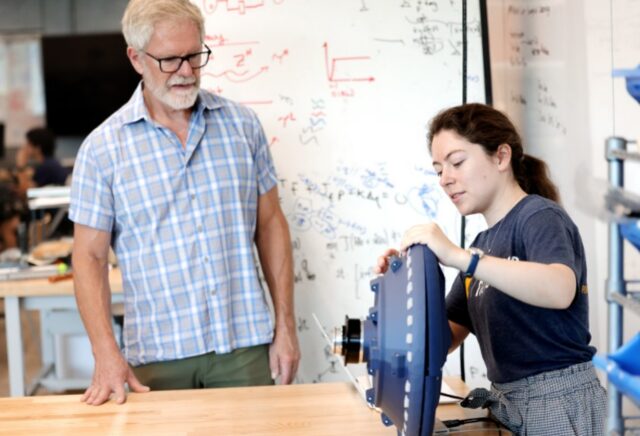
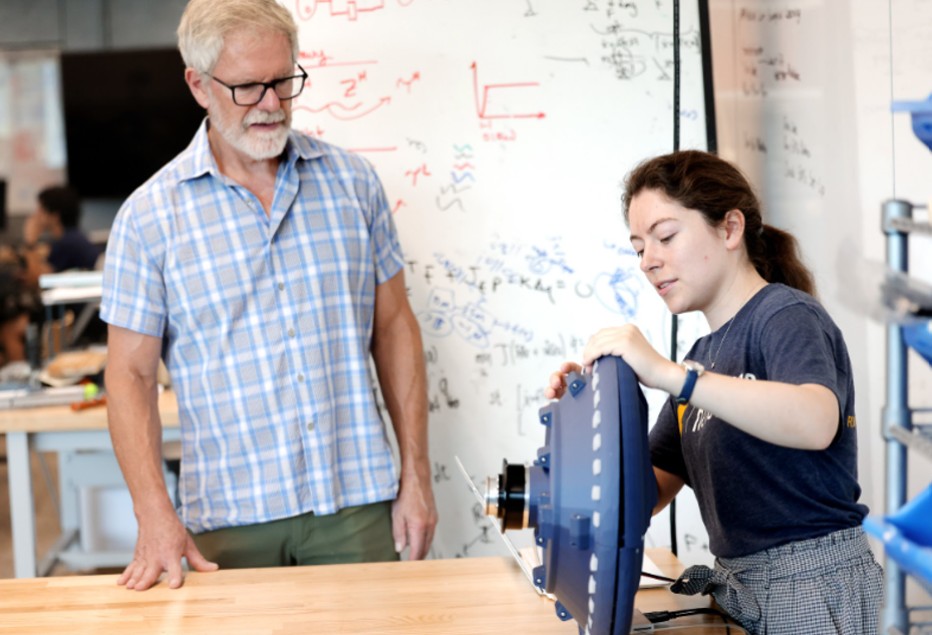
Prof. Brent Gillespie and Hannah Baez, a PhD student in robotics at the University of Michigan’s School of Engineering, looking at a haptic feedback steering wheel (source: Brenda Ahearn/University of Michigan, College of Engineering, Communications and Marketing).


Researchers at the University of Michigan are developing a haptic steering wheel designed to reduce conflicts between drivers and semi-autonomous vehicle systems. Instead of forcing drivers to accept automated steering decisions or switch assistance systems off, the concept allows humans and automation to communicate through touch, tells Forbes.com.

The experimental steering wheel contains inflatable bladders and bubbles that expand or deflate to indicate what the automated system intends to do. A driver can squeeze a bladder to disagree with a proposed maneuver. The automation can then accept the request or provide tactile feedback indicating why its preferred action should continue.

Hannah Baez, a doctoral student in robotics, developed the system with professor Brent Gillespie and other researchers. The work received funding and collaboration from the Toyota Research Institute. Their goal is to make drivers and automated systems behave more like teammates rather than competing controllers.

Researchers tested the concept with 30 participants completing 39 turns at simulated intersections. The experiment compared three conditions: two-way communication between driver and automation, one-way communication from the automation, and no communication.

Two-way interaction produced significantly better driver performance when the intentions of the driver and automated system differed. Researchers also found that participants swerved less when they could negotiate with the system through haptic feedback. Participants rated their trust in automation after every three turns, allowing the researchers to examine the relationship between communication and confidence in automated systems.

The research addresses a growing human–machine interaction challenge as vehicles adopt more driver-assistance technologies. Drivers may disable features such as lane centering when automated steering feels intrusive or unpredictable.

The haptic interface suggests another approach. Instead of automation silently taking control, vehicles could communicate their intentions and give drivers a physical way to respond. The research is currently without funding after several years of Toyota support, leaving its next development phase uncertain.

Onshape AI Combines Design Assistance with API Access

Source: Leo AI.
Source: Leo AI.


Onshape has steadily expanded its built-in AI capabilities, but the Leo AI article argues that engineers should distinguish between AI that helps operate the CAD system and tools that can access actual design data. Five capabilities are currently available: AI Advisor, LLM-powered FeatureScript generation, AI model search, AI Quick Render, and Replicate Annotations.

AI Advisor provides real-time guidance based on Onshape documentation and Learning Center resources. Engineers can ask about workflows, troubleshooting, modeling practices, mates, drawings, and other software-related topics. However, the assistant does not reason over the active model or understand its revision history, assemblies, or release status.

FeatureScript generation reaches closer to geometry. Onshape uses AI to generate and autocomplete FeatureScript code for custom parametric features. Its FeatureScript MCP Server also connects external language models with FeatureScript, allowing natural-language instructions to become reusable CAD features. The article stresses that AI-generated automation still requires engineering review.

Other AI functions address narrower tasks. AI-powered search uses generated model descriptions instead of relying only on filenames and metadata. AI Quick Render creates presentation images from text prompts, while Replicate Annotations uses machine learning to transfer dimensions, tolerances, layouts, and other annotations between drawings.

For deeper access to engineering information, Onshape’s REST API remains important. It exposes document structures, workspaces, versions, assembly relationships, release states, and permissions. This programmatic access can support AI systems that need to analyze actual project data across multiple documents.

Still, neither built-in AI nor the API automatically reaches information stored outside Onshape. Engineering knowledge may remain scattered across PDM and PLM systems, ERP platforms, standards, spreadsheets, and network drives.

The article presents Onshape’s AI strategy as a layered approach: built-in tools assist with specific CAD tasks, the API provides structured access to design information, and broader AI systems can connect knowledge distributed across engineering platforms.

NX’s Built-In AI Has Clear Boundaries

Source: Leo AI.
Source: Leo AI.


Siemens has integrated several AI capabilities into NX, but the Leo AI article argues that engineers need to understand exactly what each feature can access. NX Design Copilot, geometry-focused AI tools, and Teamcenter Copilot perform distinct jobs rather than functioning as one assistant with access to all engineering information.

NX Design Copilot primarily serves as a natural-language interface to Siemens documentation. Engineers can use it to find commands, understand workflows, explore best practices, and learn unfamiliar NX capabilities. However, it is not grounded in the active part, assembly, project history, or company engineering data. It therefore cannot explain why a component has a particular dimension, identify previous revisions, or determine whether an internal standard permits a specific part.

Other NX AI features work directly with geometry. Select Similar Faces and Edges recognizes matching geometric elements within a single part, helping engineers make repetitive edits more efficiently. PMI prediction uses machine learning to predict annotation plane definitions during automated product manufacturing information authoring. These tools interact with model geometry but remain focused on the current model.

Siemens handles broader product information through Teamcenter Copilot. It can query Teamcenter data, analyze documents and BOMs, extract requirements, perform impact analysis, support change workflows, generate test cases, and summarize quality information. This makes it more suitable for questions involving revisions, approvals, requirements, and product records.

The article identifies another gap: engineering knowledge scattered across legacy vaults, network drives, supplier documents, calculation sheets, standards, and multiple CAD systems. Neither NX Design Copilot nor Teamcenter Copilot automatically covers all these sources.

The practical lesson is to match each AI tool with the information it can actually access. NX Design Copilot supports software guidance, geometry AI handles model-specific tasks, and Teamcenter Copilot works with managed product data. Cross-system engineering knowledge requires a separate retrieval layer capable of searching information beyond Siemens’ individual applications.

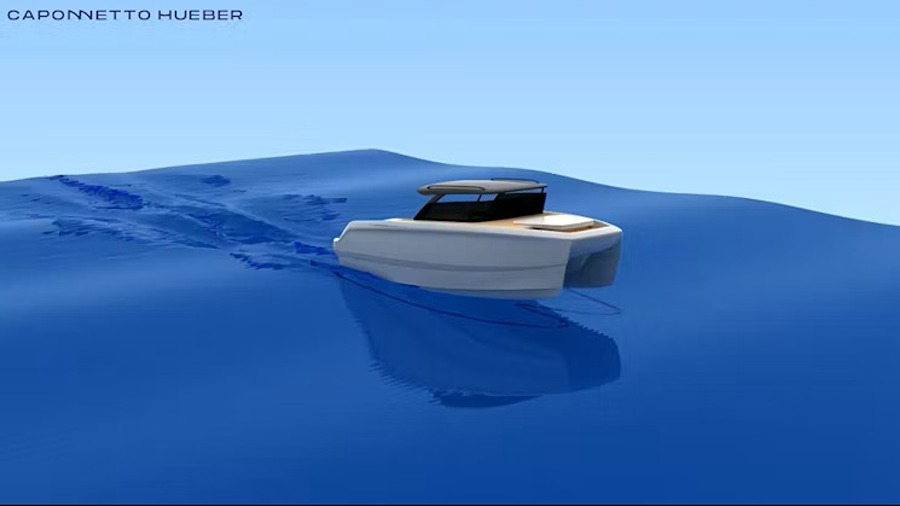
Caponnetto Hueber uses Simcenter for BGF45 Foil Design

Image: Siemens
Image: Siemens

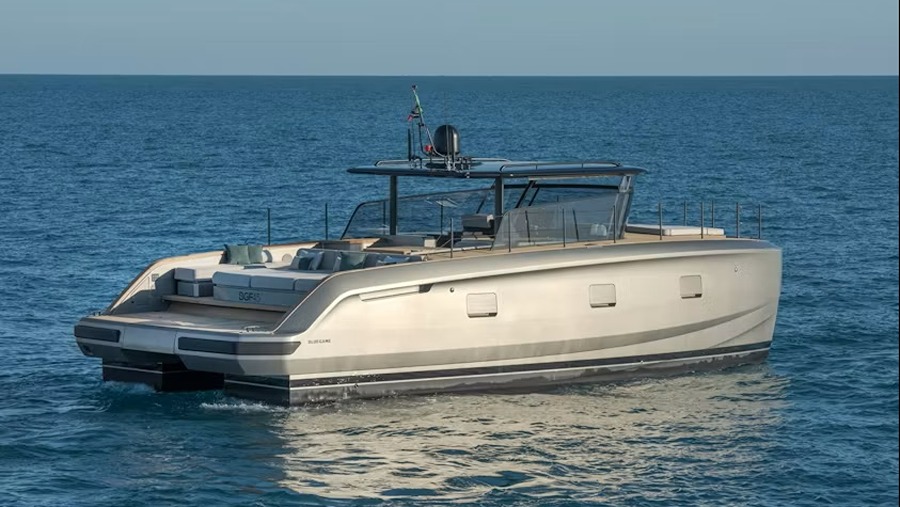
PLANO, TX, Oct 1, 2026 – Caponnetto Hueber used Siemens Simcenter software to develop the foil-assisted design of Bluegame’s BGF45, a 45-foot leisure catamaran capable of exceeding 35 knots. Siemens reports fuel consumption reductions of up to 30% compared with a catamaran without foils.

The project continues Caponnetto Hueber’s collaboration with Bluegame shipyard, part of Italy’s Sanlorenzo Group. Caponnetto Hueber used Simcenter to evaluate hydrodynamic performance, stability and comfort.

“Applying our hydrodynamic expertise, built in our America’s Cup work, to a commercial vessel requires powerful simulation tools. Siemens’ Simcenter technology allowed us to evaluate concepts quickly, refine the foil‑assisted architecture and give Bluegame a design that delivers measurable gains in efficiency and comfort,” said Mario Caponnetto, co-founder and technical director, Caponnetto Hueber. “By combining our racing experience backed up with the Siemens’ advanced simulation technologies, we were able to bring innovation to the BGF45 that simply wouldn’t be achievable through traditional methods.”

Images courtesy of Caponnetto Hueber SL

“Shipyards must deliver meaningful performance improvements without adding operational complexity for customers. Simcenter’s simulation and digital‑twin capabilities allowed the BGF45 engineering teams to validate design decisions early and optimize hydrodynamic behavior across real‑world ocean conditions,” said Mike Croegaert, director of marine solutions – simulation, Siemens Digital Industries Software. “This collaboration demonstrates how advanced simulation can bring racing‑grade innovation to commercial vessels.”

Foil Design and Simulation

Caponnetto Hueber and Bluegame adapted learnings from their 50-knot, hydrogen-powered foiling catamaran for the 37th America’s Cup. According to Siemens, this arrangement eliminates the need for expensive lift-control systems while reducing drag by up to 30%.

Images courtesy of Caponnetto Hueber SL

Caponnetto Hueber used Simcenter structural simulation software and Simcenter STAR-CCM+ CFD software to analyze structural behavior, seakeeping, maneuvering and fluid-structure interactions. Visualizations showed wave impacts, turning trajectories and vortex behavior between the foils and hull. Caponnetto Hueber engineers and Bluegame used these results to evaluate design decisions.

Electrical Monitoring

Siemens SENTRON products also form part of the BGF45’s electrical system. Integrated monitoring functions support the management of energy flows aboard the yacht.

Source: Siemens

About Siemens Digital Industries Software

Siemens Digital Industries Software, a business unit of Siemens AG, provides industrial software, hardware and related services through the Siemens Xcelerator platform. The company’s portfolio includes product lifecycle management, electronic design automation, simulation and digital twin tools, manufacturing operations management and low-code application development. These products support design, engineering and production workflows across sectors such as aerospace and defense, automotive, electronics and semiconductors, machinery, medical devices and process manufacturing. Siemens Digital Industries Software traces its origins to 1963 as United Computing, later becoming Siemens PLM Software in 2007 before adopting its current name. It supplies technologies that help organizations manage product, process data, and improve development and manufacturing efficiency across a range of industrial applications.

About Caponnetto Hueber

Caponnetto Hueber is a naval engineering consultancy headquartered in Valencia, Spain. Co-founder Mario Caponnetto started the company with Francis Hueber in 2016. The firm designs and evaluates yachts, ships, hydrofoils, propulsion systems and surface vessels. Its services include computational fluid dynamics, naval architecture, performance modeling, prototyping and sea-trial support. Engineers model hull, sail and propeller performance using potential-flow codes, RANS, large-eddy simulation and direct numerical simulation. The company serves yacht builders, shipyards, racing teams, maritime transport operators, shipping companies and defense organizations. Its projects include racing yachts, commercial vessels, maritime decarbonization and wind-assisted propulsion. It also works on autonomous surface vessels and marine renewable-energy research. In 2024, the firm delivered hydrodynamic and foiling design for a hydrogen-powered America’s Cup chase boat. A year later, it supported Bluegame’s BGF45 foiling-yacht development, including hull-foil interaction and stability simulations.

Atlas Gets a Hand Built for Production

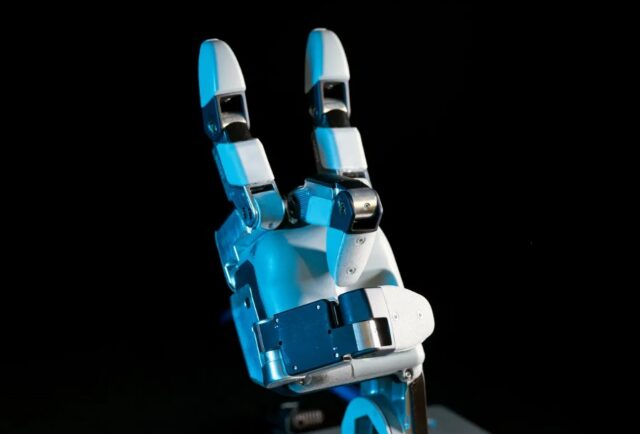
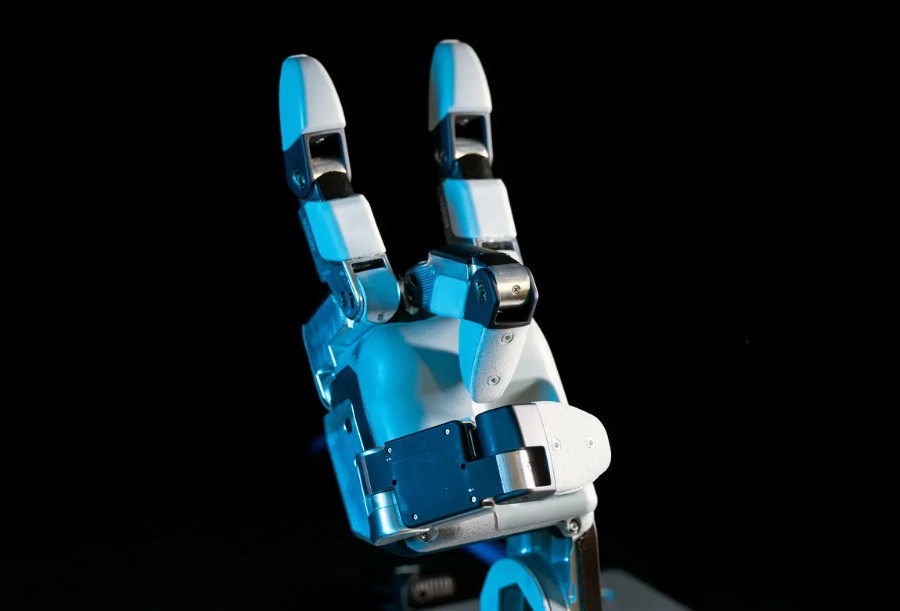
Three fingers and a thumb with 13 degrees of freedom is what Boston Dynamics says its hand needs to do just about everything (source: Boston Dynamics).


Boston Dynamics has redesigned the Atlas robot’s hand around a challenge that demonstrations can obscure: making dexterous hardware reliable, affordable, and practical to manufacture at scale. IEEE Spectrum reports that the new design prioritizes useful work over reproducing the appearance of a human hand.

The hand has three fingers and a thumb, with 13 degrees of freedom compared with 7 in its predecessor. Removing the little finger reduced complexity, while the movement gives Atlas more options for grasping objects and operating tools.

A key addition is the ability to spread the fingers apart. This lets fingers oppose one another and helps the robot hold a tool handle while activating its trigger, supporting tasks involving equipment such as drills or welding torches. Some movements exceed human capabilities, creating opportunities for reinforcement learning to discover effective manipulation strategies.

The redesign reflects a deliberate balance between flexibility and mechanical simplicity. Compared with more detailed robotic hands, fewer degrees of freedom allow larger, stronger actuators. These are integrated into the joints, with transmissions that allow external forces to drive them backward, helping the mechanism respond to contact.

Each actuator assembly can be replaced as a unit. Eliminating delicate tendons and cables crossing the joints removes components that can stretch or break, supporting repairability and consistent operation.

Boston Dynamics also wants the hand to be straightforward to simulate and sufficiently similar to human anatomy for demonstrations by people to support training. Those requirements connect design with the software methods used to teach manipulation.

The company is now examining the design details needed to manufacture 100,000 hands annually. That figure describes a production objective under consideration, not an achieved manufacturing rate.

For engineers, the article highlights the compromises involved in commercial robotics: dexterity must coexist with durability, serviceability, and production economics before humanoids can work reliably.

0FansLike
0FollowersFollow
0SubscribersSubscribe
Google search engine

Recent Articles

Trending Now